Monday, August 29, 2022

The Mystery Plain of Jars

Xiengkhouang province in North East Laos is an underrated tourist destination, but it holds the treasure of past in Laotian history. 

When we landed in Phonsavan in the province of Xiengkhouang, we had to walk 30 mins to our guesthouse in the town centre. I remembered it was a dusty isolated outskirt feeling during the walk. It was the lunar new year for the Chinese community when we we landed in this province, hence we could see some Chinese decorations in some of the Chinese descendants of the Laotian shops.

Phonsavan Town

The guesthouse we stayed was a famous guesthouse called Kong Keo, run by a Laotian family. It was the host of the guesthouse that brought us to the adventures of Xiengkhouang in the next few days.

Kong Keo Guesthouse

In the next morning, we visited the local market and some typical local villages in the outskirts. The roads were dusty and the houses were mainly made of attap and woods. The laterite roads plus the yellow sands transformed the village scene into a bright brown surroundings. There were bull carts and chicken coups around.

Squirrel for sale?

Beautiful land

Traditional village


Rice grinding


Memorable childhood

Nearby, there were big craters caused by bombing during the Vietnam war with US in the 70s, as the province is near North Vietnam border. Xiengkhouang indeed is an UXO (unexploded ordnance) district where there are still remnants of unexploded bombings around. Therefore, it is unsafe to stray from main roads and there could be unexploded bombs planted in the ground long time ago. Not far away, there is a beautiful waterfall.

Crater from bombing

UXO


The main and must see visit is the mystery Plain of Jars, the UNESCO megalithic archeological landscape. There are more than 2100 tubular stone jars scattered across Xiengkhouang plateau. There are different version of stories on how the jars came about. It is believed to be more than 2000 years old, starting from 500BCE. Some said the jars were used to store rice wine while scientists believe they were used as urns for the dead as human skeletons were found inside the jars.

The mystery Plain of Jars

For burial or rice wine?

On the 3rd day, we trekked to an unnamed beautiful hill, where the past could be partially explored. On the hill, there are tunnels made by the Vietnamese to escape and hide from the US armies during the 70s war. It was a wonderful trek, overlooking gorgeous barren valley below and passing by some farm houses.

Savannah in Laos


The hidden tunnel


Awesome scenery


A farmhouse


The endless road

This province is indeed one of the places I love the most in Laos besides the 4000 islands in the south. It is isolated, peaceful and less developed, therefore, giving a sense of tranquility..

Thursday, July 28, 2022

The Swiss Alps of Vietnam

It was a long night train with sleeper bed from Hanoi to Lao Kai, the border town of Vietnam China in the North of Vietnam. Upon arriving on the cool December morning, we took another 1-2 hour van ride to the foot hill of Sapa, the trekking heaven of Vietnam. 

I remember vividly, the start of the trek in the middle of rice paddy fields. It was December, and some of the fields were empty or had only short paddy grass. 

Start of awesome trek

Lower landscape

The higher we went, the prettier the landscape

Midway through the trek


Along the trek, there were young hill tribe kids following us around, trying very hard to sell us the local ornaments by speaking in perfect English. They learnt English purely from tourism. 

Future English teachers as they spoke perfect English

The trek was a roller coaster walk, with ups and downs along the mountain ridges. The scenery was awesome, mountains and valleys near and far away. We passed by local villages, waving hands to the local black Hmong and red Dao hill tribes in their intricate and beautiful costumes with elaborate ornaments. 

The Red Dao Hill Tribe

Sewing in open air

Finally, we reached the village guesthouse in the afternoon. We were greeted unofficially ceremoniously by the local hill tribes who wore colorful headsets and dresses.

Traditional rice grinding machine

Dried corn

Cooking with firewood in the house

Our guest beds

A village view

Later, we explored the village. There was a small stream with bridge that formed part of a washing area for the villagers. There was even a mini waterfall after the stream for a refreshing cool down.

Crossing a stream in the backyard

Mini Waterfall

It was a cold winter night, where we had a nice warm dinner on a little table with low cute chairs. 

The next morning, we had a warm breakfast on the porch of the guesthouse, overlooking the mountain valley on a blessed Christmas Day.

Porch for breakfast

A western breakfast in an eastern home

It was time to leave the peaceful nature. As we trekked out from the village, my mind was blown away with the awesome scenery of the mountain and valley in bright sunshine. Wow, a Swiss Alps in Vietnam! 

A local school in the mountain

Approaching the finale of the trek


Friday, June 24, 2022

A white heaven in Santorini

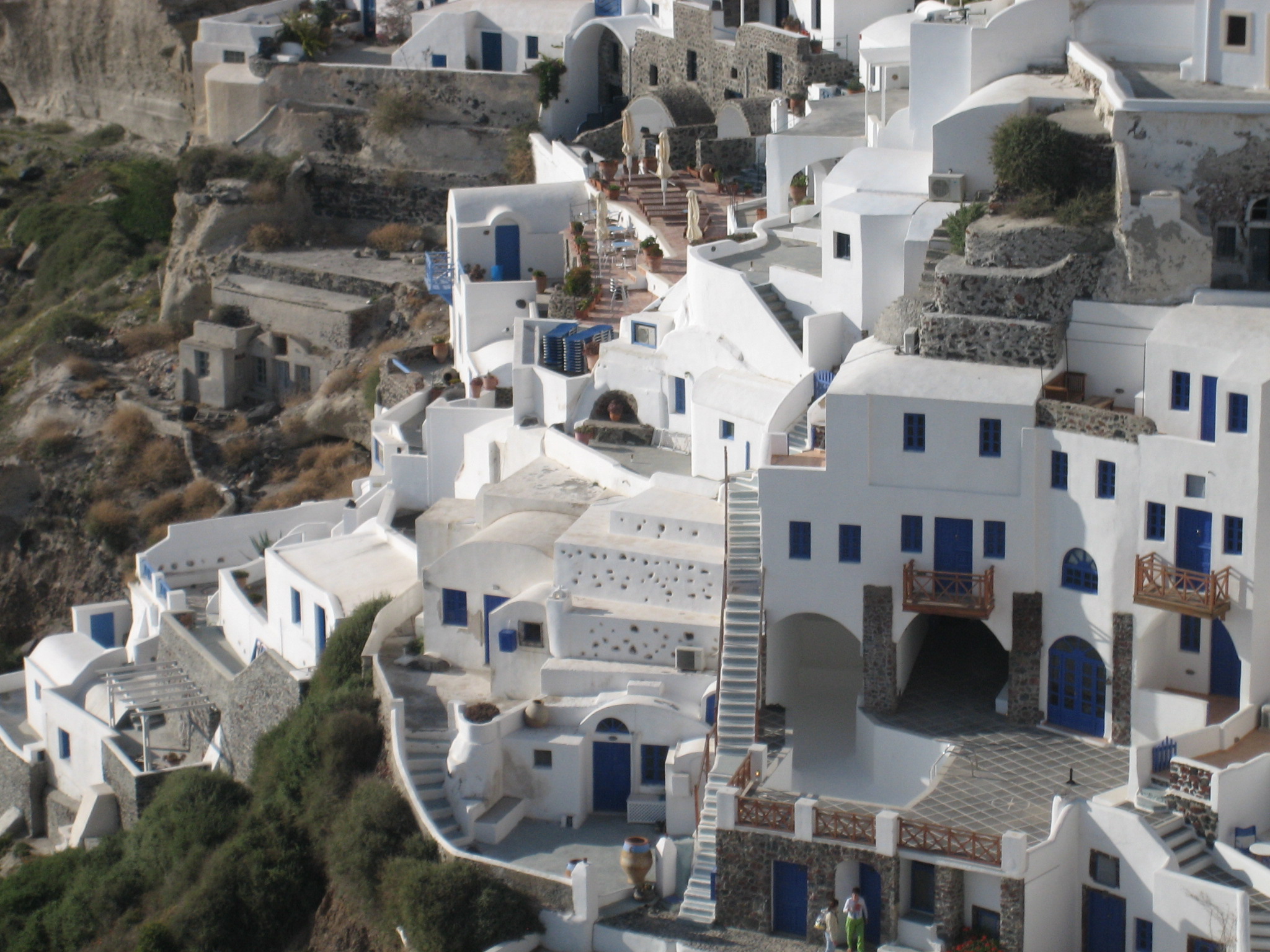
Santorini is a popular tourist destination in Greece, iconic for its white neat buildings with blue domed churches perched 300m above the caldera. Walking along the cliff with up and down the stairs next to the caldera was an amazing scenic experience.


I was mesmerised with the white color buildings upon reaching the capital city, Fira. What was more surprising was the hotel we stayed lied inside the cave along these white stretches of buildings. Exploring the inner land with flowers blooming around was another exhilarating experience.

Our cave hotel

Party taking place


It's spring time


One of the other unique attractions is the red beach (Akrotiri) where the soil is red in color. Not far away, lies the opposite black beach where we find the volcanic black soil.


The next destination was Oia, at the north western tip of Santorini. This is the scenic spot for sunset watching, overlooking the caldera. A sense of peace awakened with the sunset ray shining upon the blue sea of caldera. 


Layers of houses built on the caldera cliff


At the base of Oia town, lies Amoudi Bay. We took a cable car down to the bay. As we were descending the way, we could see locals manning their horses by walking down the winding stairs to the bay from Oia town.


Overall, it was a heaven in Santorin, the caldera, beach, flowers, white dome houses...